
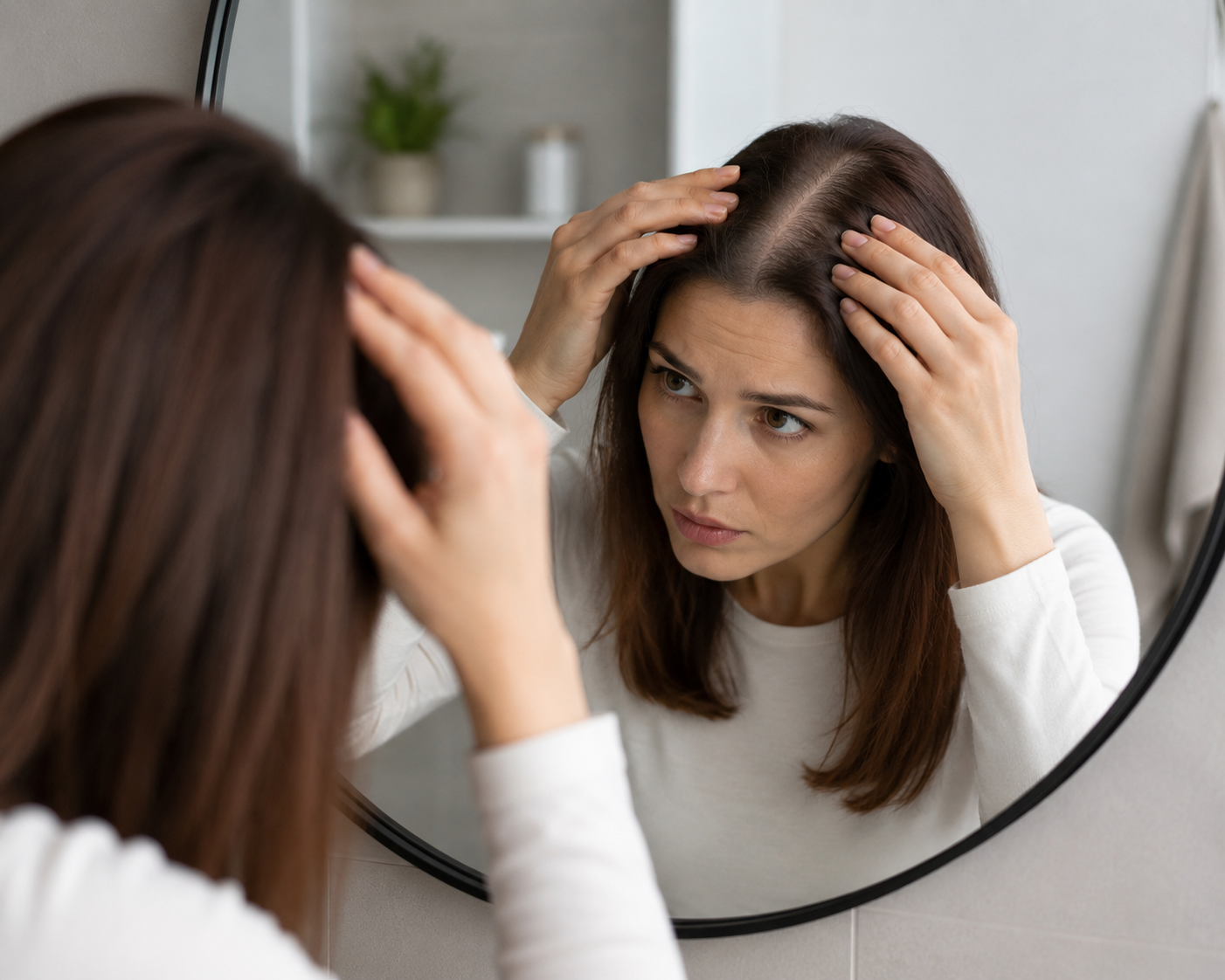
Female pattern hair loss affects a huge number of women across the UK. Yet it gets far less attention than male hair loss. Many women feel confused or even ashamed when their hair starts to thin, often assuming it is rare or unusual. It is neither.
This guide explains what female pattern hair loss is and why it happens. It covers which treatments are genuinely backed by evidence. We will also look at realistic timelines and when it makes sense to book a personalised hair loss consultation with a clinician.
What Is Female Pattern Hair Loss?
Female pattern hair loss, known medically as female androgenetic alopecia, is the most common cause of hair thinning in women. Genetics and hormones drive the condition, much like the male equivalent. It looks and progresses quite differently, though.
Men typically lose hair at the temples and crown, often ending in a receding hairline or full baldness. Women rarely experience this. Instead, the hair thins diffusely across the top of the scalp. The central parting gradually widens over time. The front hairline usually stays intact, even in more advanced cases.
How Common Is It?
Female pattern hair loss affects a substantial share of women, and the numbers climb steeply with age. Research suggests around 40 percent of women show some signs of hair thinning by the age of 50. Estimates indicate that over half of women experience this kind of hair loss by the age of 80.
| Life Stage | Approximate Prevalence |
|---|---|
| Before menopause | Around 12 to 20 percent |
| Around age 50 | Around 40 percent |
| By age 80 | Over 50 percent |
Despite how common it is, many women take years to seek help. One clinical review found that women wait an average of two and a half years before getting a proper diagnosis. Several factors explain this delay. The pattern develops subtly at first. Women may also feel embarrassed to raise hair loss with a GP, assuming it only happens to men.
Why Awareness Lags Behind Male Hair Loss
Public conversation around hair loss has focused heavily on men for decades. Adverts, clinics and even casual conversation rarely mention female hair thinning, despite how common it actually is. This gap in awareness means many women do not recognise the early signs for what they are. They may attribute thinning to stress, ageing, or simply bad luck, rather than a recognised and treatable medical condition with its own name and its own evidence based treatments.
This lack of visibility carries a real cost. Women who delay seeking help give the underlying condition more time to progress before treatment begins, and earlier intervention generally produces better outcomes for any form of pattern hair loss. Raising awareness of female pattern hair loss as a distinct, well understood and treatable condition, rather than a vague side effect of getting older, helps close that gap and encourages women to seek help sooner.
What Causes Female Pattern Hair Loss?
Unlike male pattern baldness, female pattern hair loss rarely has a single clear cause. It is usually multifactorial. Genetics and several other influences typically combine to drive the condition.
Genetics and Androgen Sensitivity
Female pattern hair loss has a strong genetic component, much like the male version. Women inherit a sensitivity in their hair follicles to androgens. These are the male type hormones that women also produce in smaller amounts. When androgens such as DHT bind to sensitive follicles, the follicles gradually miniaturise. They produce thinner, shorter hairs with each growth cycle.
This genetic predisposition can come from either parent, not only the mother’s side. A family history of thinning hair in either men or women increases the likelihood of developing the condition. The inheritance pattern is complex and involves many genes working together, rather than one single faulty gene passed down directly.
Hormonal Changes
Women experience far more hormonal fluctuation across their lives than men do. Several of these life stages can trigger or accelerate hair thinning.
- Pregnancy and postpartum: Oestrogen levels rise during pregnancy, often improving hair thickness temporarily. After birth, oestrogen drops sharply. This can trigger a wave of shedding several months later, a temporary condition known as postpartum telogen effluvium
- Perimenopause and menopause: Oestrogen falls relative to androgens during this stage of life. This shift can unmask or worsen genetic hair thinning, which is why many women first notice symptoms in their forties and fifties
- Polycystic ovary syndrome (PCOS): This condition raises androgen levels and commonly causes hair thinning alongside other symptoms, such as irregular periods and acne
- Thyroid disorders: Both an underactive and an overactive thyroid can disrupt the hair growth cycle
Clinical research notes that hair loss prevalence increases noticeably after menopause. Scientists still debate the exact role oestrogen plays in protecting hair follicles. What is clear is that the hormonal shift around menopause frequently coincides with the first visible signs of thinning for many women. This timing often leads women to assume menopause alone causes the thinning, when genetics has usually been the underlying driver all along, simply waiting for a hormonal trigger to become visible.
PCOS and Hair Thinning
Polycystic ovary syndrome deserves a closer look, since it is one of the more common and treatable hormonal causes of hair thinning in women of reproductive age. PCOS raises androgen levels in the body, which can both worsen genetic hair thinning and trigger thinning in women who might not otherwise have developed it so early. Other PCOS symptoms, such as irregular periods, acne and excess facial or body hair, often accompany the hair loss, which gives clinicians useful clues during diagnosis. Managing PCOS through medication, lifestyle changes or both can meaningfully improve hair thinning alongside any direct hair loss treatment.
Other Contributing Factors
Beyond genetics and hormones, several other factors can contribute to or worsen female pattern hair loss:
- Nutritional deficiencies: Low iron, zinc, vitamin D or biotin levels can all affect hair health and growth
- Chronic stress: Prolonged stress can push more hairs into the resting phase, compounding any underlying thinning
- Certain medications: Some blood thinners, beta blockers, antidepressants and chemotherapy drugs list hair loss as a side effect
- Styling habits: Heat damage, tight hairstyles and chemical treatments can worsen the appearance of thinning, particularly at the hairline
These factors rarely cause female pattern hair loss on their own. More often, they compound an existing genetic predisposition, which is why two women with a similar family history can experience quite different degrees of hair loss depending on their individual health and lifestyle.
Recognising the Pattern
Dermatologists and trichologists use a classification system called the Ludwig scale to describe female pattern hair loss. The Norwood scale used for men runs across seven stages. The Ludwig scale has just three, and it focuses on diffuse thinning at the crown rather than a receding hairline.
- Stage I: Mild thinning, often only noticeable on close inspection or in certain lighting
- Stage II: Moderate thinning with a visibly widening parting and reduced volume at the crown
- Stage III: More extensive thinning, with a clearly see-through area at the crown, though the front hairline typically remains
Some women develop a related pattern, sometimes called the Christmas tree pattern. Thinning widens at the front of the parting in a triangular shape resembling the outline of a tree. A smaller number of women develop thinning that more closely resembles the male pattern instead, with some recession at the temples alongside crown thinning. This variant becomes more common after menopause.
Some clinicians also use a five-point scale called the Sinclair scale alongside or instead of the Ludwig scale, since it captures finer gradations of thinning that the three-stage Ludwig system can miss. Neither scale replaces a full clinical assessment. Both exist to give clinicians and patients a shared visual language for tracking change over time, particularly useful when monitoring how well a treatment is working across many months.
Key Signs That Point to Female Pattern Hair Loss
Clinicians typically look for several features when distinguishing this condition from other causes of hair loss:
- The front hairline remains largely intact
- Thinning is diffuse across the top of the scalp rather than patchy
- The central parting gradually widens over time
- Hair feels finer overall, not just shorter in specific areas
- A gentle hair pull test does not dislodge hair easily, unlike in some other shedding conditions
A proper diagnosis from a GP, dermatologist or trichologist remains essential. Several other conditions can look similar in the early stages, and getting the diagnosis right shapes which treatment will actually help.
Ruling Out Other Causes
Female pattern hair loss is common, but it is far from the only cause of hair thinning in women. A clinician will usually want to rule out the following before confirming a diagnosis:
- Telogen effluvium: Temporary, diffuse shedding usually triggered by stress, illness, childbirth, or a sudden change in diet
- Alopecia areata: An autoimmune condition causing patchy hair loss, sometimes in small round bald spots
- Iron deficiency anaemia: A common and often overlooked cause of hair thinning in women, particularly those with heavy periods
- Thyroid dysfunction: Both hypothyroidism and hyperthyroidism can cause diffuse hair loss
- Traction alopecia: Hair loss caused by repeated tension from tight hairstyles, braids or extensions
Several of these conditions are treatable or even reversible once a clinician identifies and addresses the underlying cause. This is exactly why an accurate diagnosis matters so much. A clinician will typically ask about your medical history, menstrual cycle, recent life events and family history. They may also order blood tests checking iron, thyroid function and hormone levels.
Evidence Based Treatments for Female Pattern Hair Loss
Treatment options for women differ in some important ways from those available to men. Finasteride is not a safe option for most women, which rules out the most widely used male treatment from the start. The good news is that several evidence based treatments remain genuinely effective for women.
Topical Minoxidil
Topical minoxidil is the only treatment licensed for female pattern hair loss in the UK. It also has the strongest evidence base of any option available to women. Doctors are not entirely sure how it works. It appears to increase blood flow to the hair follicles and extend the growth phase of the hair cycle.
The licensed strength for women is a 2 percent solution, applied directly to the scalp once or twice daily. Some clinicians may recommend the stronger 5 percent solution under specialist guidance. This carries a slightly higher chance of unwanted facial hair growth as a side effect in women, so it is not the automatic first choice.
What the Evidence Shows
Clinical studies have shown real improvements in quality of life for women using topical minoxidil. Many participants experienced a slowing or stopping of hair loss, alongside an improvement in hair thickness. Results take time, though. Most studies recommend at least 12 months of consistent use before judging how well the treatment has worked.
One study assessing quality of life in women with female pattern hair loss found that topical minoxidil treatment improved patients’ wellbeing alongside the physical improvements in hair density. This matters because hair loss affects far more than appearance alone for many women, and an effective treatment can ease that burden in more than one way.
What to Expect When Starting Minoxidil
Many women notice an increase in shedding during the first few weeks of treatment. This can feel alarming, but it usually signals that the hair cycle is resetting rather than worsening. The shedding typically settles within about six weeks.
Minoxidil can sometimes cause skin reactions where you apply it, including dryness, redness, scaling or itchiness. Do not apply it to broken or irritated skin. Some women also notice their hair feels drier or more prone to tangling while using it. A good conditioner usually helps manage this.
Minoxidil only works for as long as you continue using it. Stopping treatment typically leads to a gradual return of the hair loss pattern, usually within a few months.
Oral Minoxidil
Low dose oral minoxidil tablets have become an increasingly used option for women who do not tolerate or respond well to the topical solution. Doctors originally developed minoxidil as a blood pressure medication. The tablet form requires a private prescription and careful clinical monitoring, since the drug can affect blood pressure and heart rate at higher doses.
Doctors typically start women on a very low dose, sometimes as little as 0.625mg taken on alternate days. They adjust this gradually based on response and tolerability. Clinicians generally reserve this approach for women who have not responded well to topical treatment, or who experience scalp irritation that makes daily topical application difficult.
Oral minoxidil is not suitable for everyone. Women with certain heart conditions, kidney problems or a history of low blood pressure usually need a different approach. This is exactly why clinical assessment matters before starting, rather than simply ordering tablets without any monitoring in place.
Clinicians monitoring oral minoxidil treatment typically check blood pressure and pulse at regular intervals, particularly in the early weeks of treatment when the dose may still be adjusted. Side effects at low doses remain uncommon, but can include fluid retention, mild swelling in the ankles, or unwanted hair growth on the face in some women. Reporting any new symptoms promptly allows a clinician to adjust the dose or pause treatment if needed, which is a level of safety that unsupervised online purchasing simply cannot offer.
Treating Underlying Hormonal Causes
When hormonal conditions such as PCOS or thyroid dysfunction contribute to hair thinning, addressing the underlying cause often improves hair growth alongside any topical treatment. This might involve medication to manage PCOS symptoms, thyroid hormone replacement, or another treatment tailored to the specific hormonal imbalance identified through blood tests.
This is one of the clearest reasons why female hair loss benefits from a proper diagnostic workup. Jumping straight to a product without understanding the cause risks missing a treatable hormonal issue entirely. Treating an underlying thyroid condition, for example, may resolve hair thinning that minoxidil alone would not fully address.
Supplements and Nutritional Support
If blood tests reveal a genuine deficiency in iron, vitamin D, zinc or biotin, addressing this can meaningfully improve hair health. Hair regrowth support capsules containing biotin alongside other nutrients may help in these cases. It is worth flagging that products containing finasteride are not suitable for most women. These should only be used under specific specialist guidance for the rare cases where this genuinely applies.
Supplementing without a genuine deficiency tends to offer limited benefit. Blood tests give a much clearer picture of whether nutritional support is likely to help in your specific case, rather than guessing and hoping for the best.
What Does Not Work
The hair loss industry markets heavily towards women, and not every product lives up to its claims. A trustworthy approach means being honest about where the evidence is thin.
- Volumising shampoos and serums: Can improve the appearance of existing hair but do not address follicle miniaturisation
- Unregulated supplement blends: Often lack robust evidence beyond addressing genuine, confirmed deficiencies
- Scalp massage devices alone: May support circulation but will not reverse genetic hair thinning by themselves
- Extreme diet or detox claims: Rarely supported by clinical evidence and can sometimes worsen nutritional deficiencies
If a product promises rapid, dramatic regrowth without any mention of the hair cycle, treat that as a signal to look more closely before buying.
How Long Does Treatment Take to Work?
Patience matters enormously here, just as it does for male pattern hair loss. Hair grows in cycles measured in months. Visible results never appear overnight, however much you might want them to.
| Timeframe | What to Expect |
|---|---|
| 0 to 6 weeks | Possible temporary increase in shedding, no visible improvement yet |
| 3 to 4 months | Shedding typically settles, early signs of stabilisation for some women |
| 6 to 12 months | Noticeable improvement in density and thickness for many women |
| 12 months plus | Most reliable point to assess overall treatment success |
Consistency drives results more than any other factor. Stopping and restarting treatment, or expecting visible change within a few weeks, ranks among the most common reasons women feel disappointed with otherwise effective treatments.
Is Treatment Available on the NHS?
NHS provision for cosmetic hair loss treatment remains limited, much as it is for men. The NHS does not generally fund minoxidil for female pattern hair loss. Clinicians do not classify it as a medical necessity in the way that hair loss from illness or chemotherapy can be.
You can buy 2 percent topical minoxidil over the counter at UK pharmacies without a prescription. The stronger 5 percent solution and oral minoxidil tablets work differently. Both require a private prescription and clinical oversight.
An NHS GP appointment for hair loss usually focuses on ruling out treatable underlying causes. Thyroid dysfunction and iron deficiency sit high on that list, rather than providing ongoing cosmetic treatment. This makes sense from a resource perspective. It does mean, though, that many women turn to private prescribing services for an accurate diagnosis and an appropriately monitored treatment plan.
Starting Treatment Safely
Oral minoxidil is a prescription medicine, and even topical treatment benefits from proper guidance. Starting treatment safely means going through a genuine clinical process. A responsible approach typically includes:
- A detailed medical and family history, including menstrual and reproductive history where relevant
- Blood tests to check iron, thyroid function and hormone levels where appropriate
- An assessment of the pattern and likely cause of your hair loss
- A discussion of suitable treatment options, including realistic expectations and possible side effects
- Ongoing support to monitor progress and adjust the plan if needed
A clinician follows this process during a hair loss consultation, reviewing your individual circumstances rather than offering a generic solution.
Be cautious of any service offering prescription strength treatment without any clinical assessment at all. Hormonal causes of hair loss are common in women. These often respond to targeted treatment that a generic, minoxidil only approach would miss entirely.
Living With Female Pattern Hair Loss
Hair carries real significance for many women’s sense of identity and confidence. Hair loss can understandably affect mental wellbeing as a result. Studies have linked female hair thinning to irritability, anxiety and lower self-esteem, even when the hair loss itself is mild from a clinical standpoint.
The NHS recognises this explicitly. It notes that the psychological impact of hair loss deserves attention alongside any physical treatment. If hair loss is affecting your confidence or mental health, raise this with your GP. Support groups and counselling can help alongside any treatment you choose to pursue.
Practical coping strategies can also make a real difference day to day. Many women find that adjusting their hairstyle, using volumising products, or seeking advice from a hairdresser experienced with thinning hair helps them feel more confident while treatment takes effect. Camouflage products such as root concealer sprays or scalp powders can also help in the short term, covering the scalp visibility that often causes the most distress while longer term treatment has time to work. None of this replaces medical treatment, but it can ease the emotional weight of the waiting period that effective treatment inevitably involves.
It is also worth remembering that female pattern hair loss is extremely common, even though it remains under-discussed. You are not alone in experiencing it, and effective, evidence based options exist regardless of which stage you are at.
Frequently Asked Questions
Below are some of the most common questions we hear about female pattern hair loss. For a fuller list covering ordering, delivery and account queries, visit our main FAQs page.
At what age does female pattern hair loss usually start?
It can begin at any age after puberty, but most women first notice symptoms in their thirties to fifties. Hormonal changes around perimenopause and menopause often coincide with the first visible signs.
Is female pattern hair loss the same as male pattern baldness?
They share a genetic and hormonal basis, but the pattern differs considerably. Women experience diffuse thinning across the crown with a widening parting. The front hairline usually stays intact. Men typically see a receding hairline alongside crown thinning instead.
Can women use finasteride for hair loss?
No, not in standard cases. Finasteride is not licensed for women of childbearing potential due to the risk of harm to a male foetus. Most women are advised against using it. Topical or oral minoxidil remains the recommended option for the vast majority of women.
Does minoxidil work for women?
Yes. Topical minoxidil is the only licensed treatment for female pattern hair loss in the UK and has strong clinical evidence behind it. Many women see a slowing of hair loss and improved thickness after consistent use of at least 12 months.
Why is my hair shedding more after starting minoxidil?
An initial increase in shedding is a recognised, usually temporary response that signals the hair cycle resetting. It typically settles within around six weeks. Persistent heavy shedding beyond this point is worth discussing with your clinician.
Can hormonal changes like menopause cause hair loss?
Yes. Oestrogen falls relative to androgens during perimenopause and menopause. This shift can unmask or worsen a genetic predisposition to hair thinning, which is why many women notice symptoms for the first time during this stage of life.
Is female pattern hair loss treatment available on the NHS?
Generally not for the cosmetic aspect. The NHS does not usually fund minoxidil for female pattern hair loss. The 2 percent topical solution is available over the counter without a prescription, though.
Can stress cause hair loss in women?
Chronic stress can trigger telogen effluvium, a temporary form of diffuse shedding distinct from female pattern hair loss. It can also worsen existing pattern hair loss by pushing more hairs into the resting phase at once.
How long before I see results from treatment?
Most women need at least three to four months before shedding settles. Noticeable improvement in density typically appears between six and twelve months. Most clinical studies assess results after a full year of consistent use.
What happens if I stop using minoxidil?
Minoxidil only works while you continue using it. Stopping treatment typically leads to a gradual return of the hair loss pattern, usually within a few months.
Should I get blood tests before starting treatment?
It is generally a good idea. Blood tests checking iron, thyroid function and hormone levels can reveal treatable underlying causes. Minoxidil alone would not address these, and the tests help confirm whether female pattern hair loss is the right diagnosis in the first place.
How do I know if my hair loss is female pattern hair loss and not something else?
Female pattern hair loss typically presents as diffuse thinning across the crown with a widening parting, while the front hairline stays largely intact. Patchy hair loss, sudden heavy shedding, or hair loss with scalp inflammation point towards different conditions instead, and these warrant prompt assessment by a GP or dermatologist.
Final Thoughts
Female pattern hair loss is a common, genuinely treatable condition driven by a combination of genetics and hormonal factors. It follows a different pattern from male hair loss. The treatment landscape differs too, with topical and oral minoxidil forming the evidence based backbone of care for most women.
So many different factors can contribute to hair thinning in women, which is exactly why getting an accurate diagnosis matters just as much as starting treatment. Addressing an underlying hormonal or nutritional cause alongside minoxidil often gives better results than minoxidil alone. The combination of patience, consistency and an accurate diagnosis tends to produce the best outcomes over time, even though none of these feel especially satisfying when you are searching for a quick answer.
If you are noticing thinning hair and want to understand your options properly, speaking to a clinician makes a sensible starting point. You can learn more about the team behind Follicle or explore further guidance on the Follicle Journal. You can also book a hair loss consultation to get a personalised assessment of your hair loss and the treatment options that may suit you.





One Comment