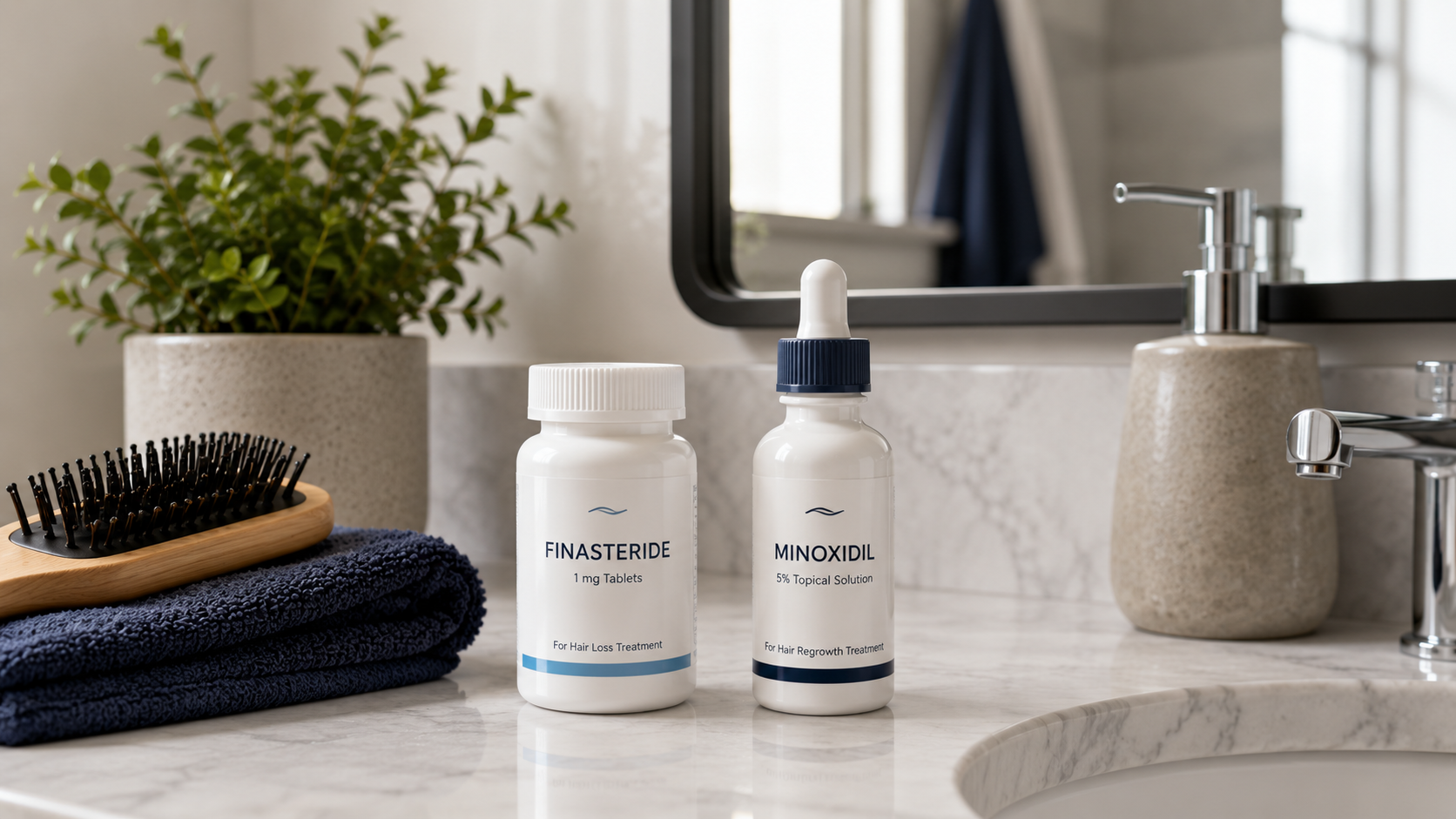
You have probably come across the same two names again and again: finasteride and minoxidil. They are the only two hair loss treatments licensed for use in the UK. Both have decades of clinical evidence behind them. Yet most comparison guides stop at a simple table. They leave you no closer to knowing which one suits your hair, your health, and your goals.
This guide goes further. We explain how each treatment works at a biological level. We look at what the clinical trial data actually shows, and who tends to respond best to each option. We explain why combining the two is now the gold standard for many dermatologists. We also cover the side effects honestly, including the ones some retailers skip over. Finally, we explain how to access treatment safely through a UK-registered pharmacy. Everything below aims to help you decide, not to sell you something.
Table of Contents
- Why Hair Loss Happens: Understanding DHT and Androgenetic Alopecia
- How Hair Loss Is Diagnosed and Staged
- What Is Finasteride and How Does It Work?
- What Is Minoxidil and How Does It Work?
- Finasteride vs Minoxidil: Head-to-Head Comparison
- Who Tends to Do Best on Finasteride
- Who Tends to Do Best on Minoxidil
- Combination Therapy: Why Using Both Together Works Better
- Side Effects: An Honest Breakdown
- What Results Actually Look Like, and When
- Can Women Use Finasteride and Minoxidil?
- How to Start Treatment Safely in the UK
- How Much Does Treatment Cost in the UK?
- Lifestyle Factors That Support Treatment
- Common Mistakes That Sabotage Results
- Frequently Asked Questions
- Final Thoughts
Why Hair Loss Happens: Understanding DHT and Androgenetic Alopecia
Before comparing treatments, it helps to understand what you are actually treating. Androgenetic alopecia causes most hair loss in men and much of the hair thinning in women. People also call it male or female pattern hair loss. It is a genetic condition. It is not a hygiene issue, and it does not signal a problem with your general health.
A hormone called dihydrotestosterone, or DHT, sits at the centre of the condition. An enzyme called 5-alpha reductase converts testosterone into DHT. In people with a genetic sensitivity to pattern hair loss, DHT repeatedly binds to hair follicles on the scalp and makes them shrink. Doctors call this process follicular miniaturisation. Over time, the growth phase of the hair cycle shortens. The follicle then produces thinner, shorter strands, and it may eventually stop producing visible hair altogether.
This explains why hair loss on the top and front of the scalp tends to follow a predictable pattern in men. Clinicians often map this using the Norwood scale. Women more commonly experience diffuse thinning across the crown, with a widening centre parting. The genetics behind this sensitivity can come from either side of the family. The old idea that baldness only comes from your mother’s father is a myth.
Understanding DHT matters because it explains why finasteride and minoxidil work in completely different ways. One treatment addresses the hormonal cause. The other works around it. Recognising which mechanism matches your situation is the first step to choosing the right treatment. The NHS provides a helpful overview of the condition and the treatment options currently available in the UK.
How Hair Loss Is Diagnosed and Staged
Before starting any treatment, it helps to know roughly how advanced your hair loss is. This influences which approach is likely to work best. Clinicians typically use two standard classification tools.
The Norwood-Hamilton Scale for Men
This scale grades hair loss from stage one, where the hairline looks essentially unchanged, through to stage seven. At stage seven, only a band of hair remains around the sides and back. Most men who start treatment fall somewhere between stages two and five. At this point the hairline has started to recede at the temples, or the crown has begun to thin, but plenty of active follicles remain.
The Ludwig Scale for Women
This scale grades the degree of diffuse thinning across the crown rather than mapping a receding hairline. It ranges from mild widening of the centre parting through to more extensive, see-through thinning across the top of the scalp.
These scales matter for two reasons. First, earlier treatment tends to mean better outcomes, because more follicles remain active and capable of responding. Second, the scales give you and your clinician an objective way to track progress over time. This beats relying on subjective impressions, which lighting, hairstyle, and daily familiarity can easily distort. A licensed clinician can place your hair loss on the appropriate scale during a full consultation. They will also review your medical history and rule out other causes of shedding, such as stress, thyroid issues, or nutritional deficiencies. These need a different treatment approach entirely.
What Is Finasteride and How Does It Work?
Finasteride is a prescription-only medication. Most people take it as a 1mg tablet once a day. It belongs to a class of drugs called 5-alpha reductase inhibitors. As the name suggests, it blocks the enzyme that converts testosterone into DHT. With less DHT circulating, miniaturised hair follicles get a chance to recover, and further hormone-driven shrinkage slows considerably.
With consistent daily use, finasteride cuts scalp DHT levels by around 60 to 70 percent. Because it works systemically rather than only where you apply it, it treats the entire scalp evenly, including areas a topical product struggles to reach.
Manufacturers originally developed and licensed finasteride at a higher dose to treat enlarged prostate. They later approved the lower 1mg dose specifically for male pattern hair loss. It is not currently licensed for use in women, a point we return to later in this guide.
Think of finasteride as primarily a preventative treatment. Its biggest strength lies in stopping further loss and stabilising the hairline and crown. Regrowth can and does happen, particularly in follicles that have miniaturised but not yet disappeared. Most clinicians still consider this a slower, more modest effect than its ability to halt progression.
What Is Minoxidil and How Does It Work?
Minoxidil works through an entirely different mechanism. Researchers originally developed it as an oral treatment for high blood pressure, then noticed an unexpected side effect: increased hair growth. This led to a topical version made specifically for treating hair loss. UK pharmacies now widely stock it under various brand and generic names, as a 2 percent or 5 percent solution or spray for the scalp.
Minoxidil acts as a vasodilator, meaning it widens blood vessels. Applied to the scalp, it increases blood flow and oxygen delivery to hair follicles. Researchers also believe it shortens the resting phase of the hair cycle, known as telogen, and extends the active growth phase, known as anagen. This allows more follicles to actively produce hair at any given time.
Minoxidil does not touch the hormonal cause of pattern hair loss, so it cannot stop the underlying miniaturisation process. What it does very effectively is stimulate the follicles that remain. Used consistently, it encourages thicker, faster, and more sustained growth.
You apply minoxidil topically, usually twice a day for the standard 2 percent and 5 percent solutions, although clinicians increasingly prescribe once-daily higher-strength formulations. Some UK clinicians also prescribe a low-dose oral version off-label, for people who find the topical formulation impractical or irritating.
Finasteride vs Minoxidil: Head-to-Head Comparison
The table below summarises the core differences between the two treatments, based on their licensed use and the available clinical evidence.
| Factor | Finasteride | Minoxidil |
|---|---|---|
| How it works | Blocks DHT production at the hormonal level | Increases blood flow and extends the hair growth phase |
| Form | Oral tablet, once daily | Topical solution or spray, once or twice daily |
| Prescription status | Prescription-only medication in the UK | Available over the counter and via prescription |
| Primary strength | Stopping further hair loss | Stimulating new growth |
| Licensed for women | No | Yes, 2% solution |
| Typical time to see results | 3 to 6 months, up to 12 for full effect | 2 to 4 months, up to 12 for full effect |
| What happens if you stop | DHT-driven loss gradually resumes | New growth typically disappears within months |
Neither treatment beats the other in every case, because they do not solve the same problem. Finasteride addresses the cause. Minoxidil addresses the symptom. This is precisely why so many UK clinicians now recommend using both together, a point we explore in detail further down this guide.
Who Tends to Do Best on Finasteride
Finasteride tends to suit men in the earlier to moderate stages of pattern hair loss, where the priority is halting progression before more follicles miniaturise beyond recovery. It works particularly well for hair loss affecting the crown and mid-scalp, an area where clinical trials consistently show the strongest response.
It also suits people who want a low-effort daily routine. A single tablet each morning is far easier to stick with than a twice-daily topical application. Consistency remains the single biggest factor in whether any hair loss treatment succeeds.
Finasteride does not suit everyone. Because it works on hormone pathways, it carries no licence for women. This matters most for women who are or may become pregnant, due to the risk of harm to a male foetus. Anyone with a personal or family history of certain hormone-sensitive conditions should discuss this fully with a clinician before starting. This is exactly why a proper online consultation matters, rather than buying medication without any clinical oversight.
Who Tends to Do Best on Minoxidil
Minoxidil is often the first treatment people try. It needs no prescription, and it suits both men and women. It works well for people with diffuse thinning or early crown thinning. It also suits anyone who wants to see an effect on visible density rather than only slow a decline.
It also suits anyone who cannot, or would prefer not to, take an oral hormone-related medication. This includes most women with female pattern hair loss. Because you apply it locally, its effects stay limited to the site of application, rather than circulating through the body the way an oral tablet does.
The trade-off is commitment. Minoxidil needs consistent application, usually twice daily, indefinitely. Missing applications regularly will noticeably reduce your results. Stopping altogether typically causes any new growth to fall out within a few months, as follicles revert to their previous state.
Combination Therapy: Why Using Both Together Works Better
Here the finasteride versus minoxidil debate becomes less of a competition and more of a partnership. The two treatments work through completely different mechanisms, one hormonal and one vascular. Using them together lets you attack pattern hair loss from two directions at once.
Multiple clinical studies have compared monotherapy against combined use. They consistently find that patients using both finasteride and minoxidil together achieve greater improvements in hair count and density than those using either treatment alone. The logic is straightforward. Finasteride slows or stops the loss of existing follicles by reducing DHT. Minoxidil simultaneously stimulates those follicles, and any others still active, to produce thicker, faster growing hair.
This combined approach explains why combination formulations exist, delivering both active ingredients together. Some come as a single daily capsule alongside a topical spray. Others combine both ingredients in one topical formulation. For many people, particularly those with more established hair loss, combination therapy offers a more complete solution than either ingredient alone. It stops further recession and encourages visible regrowth at the same time.
Combination therapy is not automatically the right starting point for everyone. Some people prefer to trial a single treatment first. This helps them understand how their body responds, and helps isolate the source of any side effects before adding a second medication. A registered clinician can help you decide whether to start with one treatment or move straight to a combined regimen. This depends on your pattern of hair loss and personal circumstances.
Side Effects: An Honest Breakdown
No medication comes entirely without risk, and any reputable source should say so rather than gloss over it. Knowing the potential side effects before you start means you can recognise them early and speak to a clinician promptly if anything feels wrong.
Finasteride Side Effects
Finasteride is generally well tolerated. Because it affects hormone pathways, a small proportion of users report sexual side effects, including reduced libido or erectile difficulties. Most clinical data suggests these effects are uncommon and usually reverse once you stop the medication. Anyone experiencing persistent symptoms should stop treatment and seek medical advice, rather than trying to manage it alone. Some users also report mood changes. This is exactly why you should only take finasteride following a proper clinical consultation, with the option to speak to a pharmacist or GP if concerns arise.
Minoxidil Side Effects
Minoxidil side effects tend to stay localised, since you apply it directly to the skin. Scalp irritation, dryness, flaking, and itching count as the most commonly reported issues. Switching between foam and liquid formulations can sometimes resolve this. Unwanted facial or body hair growth can occur if the product spreads beyond the intended application area, so careful, consistent application matters. A small number of users notice a temporary increase in shedding during the first few weeks. This usually signals that the hair cycle is resetting, rather than a reason to stop. Flag it with a clinician if it continues beyond eight weeks or feels excessive.
Do not start either treatment without appropriate medical oversight. If you have existing health conditions, or take other medications, disclose this fully during your consultation so a clinician can assess suitability properly.
What Results Actually Look Like, and When
Unrealistic expectations about timing cause many people to give up on hair loss treatment too early. Hair growth is slow, and the hair cycle itself works against quick results.
In the first one to two months, most people notice little visible change. Some even experience an initial increase in shedding, as older hairs make way for new growth. Between months three and six, the first genuine signs of improvement usually appear. Expect reduced shedding, a thicker feel to existing hair, and often the beginnings of visible regrowth in thinning areas.
Full results generally take nine to twelve months of consistent, uninterrupted use to appear, and you need ongoing treatment to maintain them. This holds true for finasteride, minoxidil, and combination therapy alike. Photograph your scalp under consistent lighting every four to six weeks. This gives a far more reliable way to track progress than judging your hair in the mirror day to day. Styling, lighting, and hair length can easily mask genuine change.
Can Women Use Finasteride and Minoxidil?
This is a common and important question, and the answer differs significantly between the two treatments. UK regulators licence minoxidil 2% solution for use in women, and it remains one of the most widely recommended treatments for female pattern hair loss.
Finasteride carries no licence for use in women. This largely comes down to its hormonal mechanism and the risk it poses during pregnancy, including to a male foetus if handled or ingested. Some clinicians prescribe alternative anti-androgen treatments for postmenopausal women under close supervision, but you should only make this decision individually with a registered clinician.
If you are a woman experiencing thinning hair, read our dedicated guide to female pattern hair loss treatment. It covers causes, diagnosis, and the treatment options suited to women in far more depth than this guide can.
How to Start Treatment Safely in the UK
Finasteride is prescription-only, and minoxidil works best as part of a properly assessed treatment plan. Starting through a regulated route matters. A legitimate provider should ask detailed questions about your medical history, current medications, and hair loss pattern before recommending any treatment. A licensed clinician should also review and approve your consultation before you receive anything.
Check that your medication comes from a pharmacy registered with the General Pharmaceutical Council, and that any clinicians involved hold the appropriate licence to prescribe in the UK. Buying prescription-strength hair loss medication from unregulated overseas websites carries real risk, including counterfeit or incorrectly dosed products.
At Follicle, a licensed UK clinician reviews every consultation, and a GPhC-registered pharmacy dispenses all medication. Read more about how the process works, and the standards we hold ourselves to, on our About page. If you are ready to find out which treatment suits your hair loss pattern, you can start your online consultation in a few minutes.
How Much Does Treatment Cost in the UK?
Cost matters, since both treatments need continuous use to maintain results. Over-the-counter minoxidil generally offers the cheaper starting point, with standard 2 percent and 5 percent solutions widely available from pharmacies and online retailers. Prescription-only finasteride tends to cost more per month, since it requires ongoing clinical oversight and dispensing through a registered pharmacy rather than an off-the-shelf purchase.
Combination treatments sit at a similar or slightly higher price point than finasteride alone, whether you choose a single capsule alongside a topical spray or a dual-ingredient formulation. They do remove the hassle of managing two separate products and two separate routines. When comparing prices between providers, check exactly what is included. Some retailers charge separately for the initial consultation, follow-up reviews, and delivery. Others build these into a single monthly price. A transparent provider should make the full ongoing cost clear before you commit, with no hidden fees once treatment begins.
Factor in that hair loss treatment is rarely a short-term expense. Both finasteride and minoxidil need indefinite use to maintain results. Choose a provider and a formulation you can realistically sustain, both financially and practically, over the long term.
Lifestyle Factors That Support Treatment
Finasteride and minoxidil address the primary drivers of pattern hair loss, but several lifestyle factors can support or undermine your results. Chronic stress raises cortisol levels, which can push more hair follicles into the resting phase prematurely. This separate condition, called telogen effluvium, can occur alongside pattern hair loss and make shedding look worse than it otherwise would.
Diet also plays a supporting role. Hair follicles are metabolically active tissue, and they need adequate protein, iron, zinc, and B vitamins, particularly biotin, to function normally. A poor diet will not cause androgenetic alopecia on its own. A genuine deficiency, though, can compound hair thinning and blunt the results of an otherwise effective treatment plan. Several studies also link smoking to reduced blood flow to hair follicles, which may work against the mechanism minoxidil relies on to deliver nutrients to the scalp.
None of these factors replace clinically proven treatment. Addressing them alongside finasteride, minoxidil, or a combination of the two gives your hair the best possible environment in which to respond.
Common Mistakes That Sabotage Results
Even the right medication can underperform because of a handful of avoidable mistakes. Inconsistency ranks as the first and most common. Skipping doses, forgetting applications, or taking breaks “to see what happens” resets your progress. It is one of the biggest reasons people conclude a treatment “didn’t work” when it never actually got a fair chance.
The second mistake is stopping too early. Visible results typically take three to six months to appear. Many people give up in month one or two, right before the treatment would have started showing an effect.
The third mistake is expecting a cosmetic transformation rather than stabilisation and thickening. Finasteride and minoxidil both work well at halting loss and improving density, but neither will restore a fully bald scalp to the hairline you had as a teenager. Setting realistic expectations from the outset makes it far easier to stay motivated and consistent.
Finally, incorrect minoxidil application can reduce absorption and increase irritation. Using too much product, applying it to wet hair, or skipping the drying time before styling all count as common errors. Follow the instructions that come with your treatment, and raise any questions with a clinician rather than guessing. This makes a meaningful difference to your outcomes.
Frequently Asked Questions
Treatment and Effectiveness
Is finasteride or minoxidil more effective?
Clinical evidence suggests finasteride has a slightly stronger effect on halting hair loss progression, while minoxidil has a strong effect on stimulating visible new growth. Used together, the evidence consistently points to better results than either treatment alone.
Can I use finasteride and minoxidil at the same time?
Yes. Clinicians often recommend this well-established approach for people who want to both stop further loss and stimulate new growth. Always start any combined regimen following a proper consultation.
How quickly will I see results?
Most people notice reduced shedding and early improvement between three and six months, with fuller results developing over nine to twelve months of consistent use.
Will finasteride or minoxidil work on a completely bald scalp?
Neither treatment can revive follicles that have permanently stopped producing hair. Results work best where follicles remain active but miniaturised, which is why starting treatment earlier tends to produce better outcomes.
Safety and Practical Questions
What happens if I stop taking finasteride or using minoxidil?
You gradually lose any benefits once you stop treatment, typically within three to twelve months, as the underlying causes of hair loss resume unchecked.
Is minoxidil safe to use long term?
Yes, minoxidil has a long safety record for continuous long-term use when applied as directed. You need ongoing use to maintain results.
Can women use minoxidil?
Yes, UK regulators licence the 2% solution for use in women. Finasteride carries no licence for female use. See our guide to female pattern hair loss for more detail.
Do I need a prescription for minoxidil?
You can buy standard topical minoxidil over the counter in the UK, though higher-strength and combination formulations typically need a clinician-approved consultation.
Can I use minoxidil on the beard or other areas?
UK regulators only licence minoxidil for scalp application in the treatment of pattern hair loss. Using it elsewhere on the body falls outside its licensed use, so discuss this with a clinician first.
For further questions about how treatment works, delivery, and what to expect, our Help Centre covers the practical side of getting started in more detail.
Final Thoughts
Finasteride and minoxidil remain the two most clinically proven hair loss treatments available in the UK. Understanding how they differ is the key to choosing the right approach for your situation. Finasteride works from the inside, addressing the hormonal cause of pattern hair loss. Minoxidil works from the outside, stimulating the follicles you still have to grow thicker and faster. For many people, using both together offers the most complete strategy. The right starting point still depends on your pattern of hair loss, your medical history, and your personal preferences around daily routine.
The most important factor in any hair loss treatment is not which product you choose. It is how consistently you use it, and whether it matches your needs through proper clinical guidance. Guessing, or piecing together a routine from forum posts and social media, rarely delivers the same results as a treatment plan built around your actual hair loss pattern.
If you are ready to find out which treatment, or combination of treatments, suits you, complete Follicle’s free online consultation in a few minutes. A licensed UK clinician will review your answers and recommend a plan suited to your hair, dispensed through our GPhC-registered pharmacy with free UK delivery on qualifying orders.
This article is for general information only and does not replace personalised medical advice. Always complete a full clinical consultation before starting any new hair loss treatment. For more on the science behind hair loss, visit the NHS hair loss overview or the NICE Clinical Knowledge Summary on male pattern hair loss.